A construction worker survived a catastrophic company van crash only to be told he was an independent contractor. Morrison Law Firm pursued the claim from the NC Industrial Commission to the NC Court of Appeals and the NC Supreme Court — and helped end the use of “ghost policies” against injured workers in North Carolina.
Jose. was a Spanish-speaking construction worker doing the kind of out-of-town job that keeps Eastern North Carolina building. On the day his life changed, he wasn’t operating a saw or carrying lumber. He was a passenger in a company van, riding home with his crew after a long shift on a job site away from his family.
He had signed the paperwork his employer handed him when he was hired. The paperwork was in English. Jose did not read English.
On the way home, the driver of the company van lost control at high speed and struck a tree. No one else in the van was hurt. Jose was paralyzed from the waist down.
Paraplegia after a catastrophic motor vehicle accident is one of the most serious outcomes a workers’ compensation lawyer ever encounters.
It means lifetime medical needs — wheelchairs, home modifications, bowel and bladder care, pressure-sore prevention, recurrent surgeries, and pain management — layered on top of lost income and a workforce that will never welcome him back to the job he had.
Under North Carolina law, an injury that occurs while an employee is traveling at the direction of the employer is generally compensable under the Workers’ Compensation Act. Jose’s case should have been straightforward.
It wasn’t.
If you’re ready to get started, call us now!
The employer denied coverage. Their position: Jose wasn’t an employee at all. He was an independent contractor. To prove it, they produced a document — in English — that Jose had signed on his first day, classifying him as a 1099 contractor and waiving his right to workers’ compensation benefits.
Perry Morrison and the Morrison Law Firm team recognized the tactic immediately.
A non-English-speaking laborer is handed an English document, told to sign it, and signs it.
Months or years later, after a catastrophic injury, that signature is held up as proof that he agreed to give up the protection of the North Carolina Workers’ Compensation Act.
The investigation went deeper. The denial wasn’t just about Jose. It exposed a broader scheme in the construction industry known in insurance circles as a “ghost policy” — an illusory workers’ compensation policy for an independent contractor obtained to satisfy a certificate-of-insurance requirement, with no real intent or capacity to cover the injured workers.
Contractors used ghost policies to look insured on paper while shifting the actual risk of catastrophic injury onto laborers who had no idea what they had signed.
Morrison Law Firm and its associate counsel built the case on two pillars.
First, the firm attacked the independent-contractor classification head-on. North Carolina applies a multi-factor test, not a label on a piece of paper. Who controlled the work? Who supplied the tools, the vehicle, the schedule?
Who decided when Jose worked, and on what project? The answers pointed to a single conclusion: Jose was an employee, regardless of what he had signed in a language he could not read.
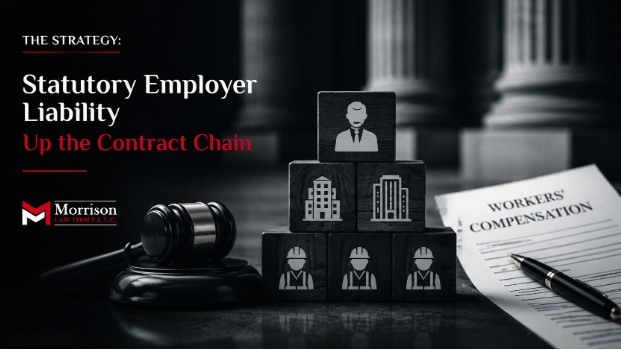
Second — and this is what made the case important beyond Jose — the firm pursued the general contractor up the chain under North Carolina’s statutory employer doctrine. Under N.C. Gen. Stat. § 97-19, a general contractor that sublets work to a subcontractor without ensuring proper workers’ compensation coverage becomes the statutory employer of the subcontractor’s injured employee. The general contractor’s insurance carrier, Cincinnati Insurance, was on the hook.
Morrison Law Firm filed for benefits before the North Carolina Industrial Commission and prepared to litigate the statutory-employer theory all the way up.
As the firm worked the case, Morrison and his associate counsel turned over what it had uncovered about ghost policies to The News & Observer in Raleigh. After an investigation revealing that this was an industrywide scheme, the paper ran a major Sunday investigative spread documenting how the practice was being used across North Carolina to deny benefits to injured construction workers — many of them immigrant laborers in exactly Jose’s position.
The reporting reached the North Carolina General Assembly. Combined with the Industrial Commission’s growing record of ghost-policy abuse, it contributed to a tightening of workers’ compensation coverage requirements and effectively ended the use of ghost policies as a workaround to deny coverage to injured laborers in the state.
Jose’s case continued through the appellate courts. The North Carolina Court of Appeals issued its opinion on June 19, 2012 (221 N.C. App. 351), affirming the recovery.
The North Carolina Supreme Court affirmed on April 12, 2013, by an evenly divided 3–3 vote (366 N.C. 501, 739 S.E.2d 552) — a result that, under North Carolina appellate practice, leaves the Court of Appeals decision standing as the controlling published authority.
Morrison Law Firm secured for Jose a lifetime of income benefits and lifetime medical care, with a structured settlement valued in seven figures..
Beyond Jose’s case, the work contributed to a systemic outcome that is rare in workers’ compensation litigation: a change in industry practice.
After the News & Observer reporting and the appellate decisions, the ghost-policy workaround that had been quietly stripping benefits from injured North Carolina laborers no longer worked.
| Stage | Action | Date |
| Injury | Catastrophic van crash — client paralyzed | Pre-litigation |
| Denial | Employer claims independent-contractor status via English-only document | Immediately post-injury |
| NCIC Filing | Attorney files the Form 18 and pursues the statutory employer theory | Filing stage |
| Investigation | Ghost-policy evidence shared with The News & Observer — major investigative report published | During litigation |
| Court of Appeals | Recovery affirmed — 221 N.C. App. 351 | June 19, 2012 |
| NC Supreme Court | Affirmed 3–3 — Court of Appeals decision stands as controlling authority — 366 N.C. 501 | April 12, 2013 |
| Resolution | Lifetime income benefits + lifetime medical care — Seven figure structured settlement recovery | Post-appeal |
If you have been hurt at work in North Carolina and you have been told any of the following, do not assume the conversation is over:
None of those statements is automatically true under North Carolina law. The Workers’ Compensation Act, N.C. Gen. Stat. Chapter 97 looks at the reality of the work relationship, the chain of contractors above you, and the actual circumstances of your injury at work.
If your workers’ compensation claim has been denied, if you have been told you are not an employee, or if you suspect your employer’s coverage is not what it should be, call Morrison Law Firm at 252-243-1003 for a free consultation. No fee unless you recover.
Disclaimer: This case study describes an actual matter handled by Morrison Law Firm, P.L.L.C. Case results depend on a variety of factors unique to each case. Past results do not guarantee, warrant, or predict future outcomes in any other case. The information in this article is for general informational purposes only and does not constitute legal advice. Reading this article does not create an attorney–client relationship with Morrison Law Firm, P.L.L.C.
About the Author
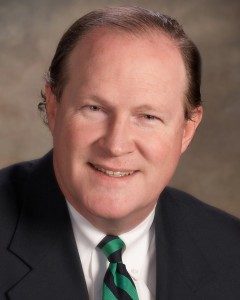
B. Perry Morrison Jr. is a North Carolina attorney (Bar No. 16376) and founder of Morrison Law Firm, PLLC in Wilson, North Carolina. Since 1989, he has represented injured workers, Social Security Disability claimants, and personal injury victims throughout Eastern North Carolina, handling more than 3,000 workers' compensation claims before the North Carolina Industrial Commission. He concentrates his practice on workers' compensation, Social Security Disability, personal injury, and wrongful death cases, representing claimants exclusively rather than employers or insurance companies.
Mr. Morrison is admitted to practice before the North Carolina Supreme Court, all North Carolina state courts, the U.S. Fourth Circuit Court of Appeals, and the U.S. District Courts for the Eastern and Middle Districts of North Carolina. He has held leadership roles within the North Carolina Bar Association, including serving as Chair of the Litigation Section, and has earned the AV Preeminent® peer rating for legal ability and professional ethics. Through decades of advocacy, he has helped injured and disabled individuals navigate complex legal claims while protecting their rights and access to benefits.
Morrison Law Firm represents injured workers across Eastern North Carolina from its Wilson, NC, office. The firm accepts workers' compensation, Social Security Disability, and personal injury cases from Wilson, Nash, Edgecombe, Pitt, Martin, Wayne, Johnston, Greene, Halifax, Northampton, Warren, Wake, Harnett, Cumberland, Sampson, and Vance counties.
© 2026 Morrison Law Firm P.L.L.C
All Right Reserved
Practice Areas
Quick Links