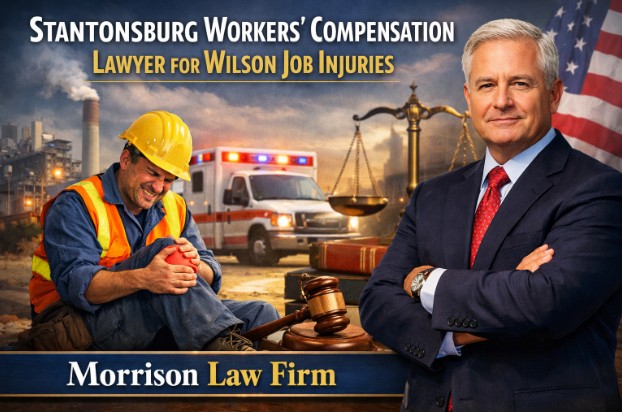
Stantonsburg residents injured at Wilson County work sites often feel the impact the same day.
Pain limits normal routines, missed shifts shrink pay, and uncertainty about medical approval creates real stress for the whole household under North Carolina’s Workers’ Compensation Act in Chapter 97.
Morrison Law Firm helps injured workers stabilize the claim record from the first injury report and filing steps through North Carolina Industrial Commission dispute resolution when an insurance carrier delays treatment, cuts off wage checks, or denies the claim.
NC-222 or NC-58 commuting often separates the employer incident report from the first medical visit.
That separation increases the risk of a mismatch between the workplace description and the urgent care or emergency department intake note.
Insurance carriers use mismatch language to challenge causation, work restrictions, and wage-loss benefits.
If you’re ready to get started, call us now!
Workers’ Compensation benefit value declines when the claim file contains gaps in the timeline, vague job-duty language, and restriction conflicts.
Insurance carriers convert those weaknesses into denial points and wage-rate disputes. A corrected record protects treatment authorization and stabilizes disability payments.
A delayed written report blurs the injury timeline. A blurred timeline invites a causation dispute.
Urgent care and ER notes that exclude job title, core tasks, and mechanism weaken the work-related link. A weak link is causing treatment authorization delays.
A modified-duty assignment that violates the treating provider’s restrictions creates a risk of benefits cutoff. Restriction compliance depends on written restrictions and written job offers.
Undocumented missed time triggers wage-rate disputes. Pay stubs and timecards convert wage loss into objective evidence.
A recorded statement can lock in incomplete facts. Inconsistent descriptions across the incident report and medical notes become denial language.
Stantonsburg workers often move between agricultural-adjacent tasks and Wilson County light industrial roles, including materials handling and maintenance.
Those roles produce repeatable injuries associated with lifting cycles, repetitive upper-extremity motion, and contact with machinery.
A consistent mechanism description and a consistent restriction record protect treatment authorization and weekly benefits.
If you’re ready to get started, call us now!
Workers’ Compensation outcomes follow the written record across the incident report, medical notes, and adjuster file.
Call-center intake can fragment the timeline across multiple handlers, so don’t do it! Single-attorney oversight ensures the injury timeline, job duties, restrictions, and wage-loss documentation remain consistent from the first report through dispute preparation.
Personal access differs from call-center handling in one operational aspect. One attorney controls the claim narrative and the evidence file from day one, instead of rebuilding facts across multiple intake touchpoints.
A dispute begins when the insurer denies the injury, delays authorized treatment, stops wage payments, or challenges the restrictions and wage loss.
The North Carolina Industrial Commission resolves disputes through a defined process that weighs medical records, job-duty documentation, and compliance with restrictions.
Use the firm’s overview of the hearing and dispute process to understand how a claim moves when a carrier refuses to pay.
| Carrier Focus | What We Lock Down Early |
| Injury timeline | Written timeline, witnesses, consistent reporting |
| Work duties | Duty description tied to the injury mechanism |
| Restrictions | Restriction compliance, wage-loss documentation |
| Treatment | Authorization requests, continuity of care |
| Disputes | Hearing-ready file, medical and work evidence |
NC-58 makes it practical for Stantonsburg residents to reach Wilson when a claim record needs a fast correction.
Office access matters when restrictions change, treatment authorization stalls, or an adjuster requests a recorded statement.
Schedule a claim review now, and contact our Wilson office to confirm availability and protect the claim record.
Morrison Law Firm, P.L.L.C. Wilson office
Address: 3713 Nash St N #101, Wilson, NC 27896 (This is NC-58.)
Phone: 252-243-1003
Email: pmorrison@nccomplaw.com
Parking: The Contact page does not publish a parking note.
Stantonsburg workers protect claim value by clearly reporting, aligning medical documentation with Wilson’s job duties, and keeping wage-loss documentation organized.
Early consistency reduces the risk of denial and strengthens the file before a dispute escalates.
Does North Carolina Workers’ Compensation cover a Stantonsburg resident injured while working in Wilson?
Coverage generally follows the employment and the work injury in North Carolina, not the worker’s home address.
Does a commute injury count as a work injury?
Commute incidents often trigger a coverage fight. A claim becomes stronger when the facts show the injury occurred during a work task, employer-directed travel, or within the course and scope of employment.
How long do I have to report a work injury to my employer in North Carolina?
Morrison Law Firm advises that reporting be done in writing as soon as possible, within 30 days, to reduce disputes.
How long do I have to file a Workers’ Comp claim in North Carolina?
Morrison Law Firm states that, in many cases, Form 18 must be filed with the North Carolina Industrial Commission within 2 years of the injury date.
What is a Form 33 Request for Hearing in North Carolina?
A Form 33 requests a hearing at the North Carolina Industrial Commission when benefits are denied, delayed, or disputed.
What documents matter most when a carrier denies a claim?
The dispute record typically turns on medical records, job-duty proof, restriction compliance, and wage-loss documentation that stays consistent across the file.
Who chooses the doctor in a North Carolina Workers’ Comp case?
Doctor choice and authorized treatment rules are common pain points. Use the firm’s claim-process guidance to map the authorization pathway.
What should I do when treatment authorization stalls?
Track the authorization request date, the treating provider’s recommendation, and the carrier’s written responses. A clean log supports escalation and dispute readiness.
Do Workers’ Compensation benefits guarantee job protection?
Workers’ Compensation benefits do not automatically guarantee continued employment. Job outcomes improve when restrictions, return-to-work communications, and wage impact are documented.
When does settlement become realistic in a Wilson claim?
Settlement leverage increases when the medical record stabilizes, restrictions stay clear, and wage-loss proof stays organized, especially when a carrier dispute develops.
Stantonsburg residents injured in Wilson improve Workers’ Compensation outcomes by building a consistent record of job duties, medical findings, written restrictions, and wage loss before the insurer escalates a dispute.
Morrison Law Firm provides Wilson-based representation focused on evidence and readiness for the North Carolina Industrial Commission. Contact us now.

About the Author
B. Perry Morrison Jr. is a North Carolina attorney (Bar No. 16376) and founder of Morrison Law Firm, PLLC in Wilson, North Carolina. Since 1989, he has represented injured workers, Social Security Disability claimants, and personal injury victims throughout Eastern North Carolina, handling more than 3,000 workers' compensation claims before the North Carolina Industrial Commission. He concentrates his practice on workers' compensation, Social Security Disability, personal injury, and wrongful death cases, representing claimants exclusively rather than employers or insurance companies.
Mr. Morrison is admitted to practice before the North Carolina Supreme Court, all North Carolina state courts, the U.S. Fourth Circuit Court of Appeals, and the U.S. District Courts for the Eastern and Middle Districts of North Carolina. He has held leadership roles within the North Carolina Bar Association, including serving as Chair of the Litigation Section, and has earned the AV Preeminent® peer rating for legal ability and professional ethics. Through decades of advocacy, he has helped injured and disabled individuals navigate complex legal claims while protecting their rights and access to benefits.
Morrison Law Firm represents injured workers across Eastern North Carolina from its Wilson, NC, office. The firm accepts workers' compensation, Social Security Disability, and personal injury cases from Wilson, Nash, Edgecombe, Pitt, Martin, Wayne, Johnston, Greene, Halifax, Northampton, Warren, Wake, Harnett, Cumberland, Sampson, and Vance counties.
© 2026 Morrison Law Firm P.L.L.C
All Right Reserved
Practice Areas
Quick Links