I’ve had a lot of denied workers’ compensation claims cross my desk since 1989, and most of them are arguable — there’s a real dispute about whether the injury happened at work, or whether it’s something that was already there before the accident. Joe’s case wasn’t arguable.
His employer denied that an accident happened at all, in a building with security cameras running the whole time. That’s the one that still sticks with me.
Joe was working through a temporary agency at the Bridgestone-Firestone plant in Wilson, pulling tires off a jammed line. A tire under pressure had gotten stuck, and when he pulled it loose, it came free all at once and slammed into his right shoulder and neck.
The employer sent him to FastMed for a couple of visits — nothing unusual there; that’s a pretty standard first move under the normal claim process.
But the moment the FastMed doctor started talking about referring Joe to an orthopedist and put him on a 10-pound lifting restriction, everything changed. The employer denied the claim outright and told Joe that what happened at work wasn’t an accident.
I’ve watched this exact sequence play out enough times to recognize it now: an employer is fine with a claim right up until the medical picture starts pointing toward something that’s actually going to cost money.
A referral, a restriction, anything that signals “this isn’t going away in a week” — that’s often the moment the story changes, and it’s one of the clearer signs it’s time to call an attorney.
If you’re ready to get started, call us now!
Two things, immediately. I told him to stop waiting on the employer’s doctor and use his own health insurance to see his own physician.
I’ve had clients sit on a denied claim for weeks, hoping it sorts itself out, and by the time they call me, the shoulder, the back, or whatever it is has gotten worse, and the case has gotten harder to prove.
You don’t put your body on hold for a dispute that hasn’t even started.
The second thing I did was file a Request for Hearing that same week. I didn’t want this sitting in an inbox for months while an adjuster decided when to get around to it. I wanted the company and its insurer before the Industrial Commission.
This is the part of the case that actually surprised me. The employer had never reported Joe’s injury to its own insurance company — no Form 19, nothing on file.
Which means when the employer told Joe “that wasn’t an accident,” the insurance carrier that was supposed to be evaluating the claim didn’t even know one existed.
The denial hadn’t come from any kind of real review. It had come from the employer, unilaterally, before the process even started.
Then I found out the whole incident was on the plant’s security footage — the tire, the jam, the moment it hit him. I’ve had cases turn on a coworker’s memory of what they think they saw.
I don’t think I’ve had one where the entire denial fell apart against a fixed camera angle that was rolling the whole time.
By the time we got to mediation, there wasn’t much left for the employer to argue. Joe got every medical bill paid and walked away with an additional $15,000 — a hearing outcome that reflects what happens when the facts are this one-sided going in. And his shoulder is fine.
He’d already started another job by then, so this wasn’t money he needed to live on.
He put it into starting a weekend business, one that’s since given other people a shot at work too. I didn’t see that coming when I took the case, and it’s still my favorite part of the story.
The lesson isn’t “always check for cameras” — that’s true, but it’s not the point. The real pattern I watch for now is timing: when a denial shows up right on the heels of a doctor mentioning a referral or a restriction, that’s not a coincidence; that’s a signal.
The medical opinion changed, and so did the employer’s version of events. Once I see that sequence, I stop treating “it wasn’t an accident” as a factual claim and start treating it as a reaction — and I go find out what it’s a reaction to.
It’s the same instinct behind knowing your rights as an injured worker in the first place: the burden isn’t on you to disprove the employer’s story; it’s on them to support it.
Past results do not guarantee a similar outcome in any future case. Every workers’ compensation claim depends on its own facts, evaluated under North Carolina General Statute Chapter 97 and reviewed by the N.C. Industrial Commission.
If your employer denied a claim that you know is real, talk to us before you accept that as the final word. The first conversation costs nothing.
About the Author
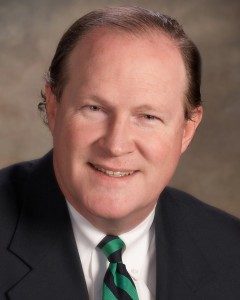
B. Perry Morrison Jr. is a North Carolina attorney (Bar No. 16376) and founder of Morrison Law Firm, PLLC in Wilson, North Carolina. Since 1989, he has represented injured workers, Social Security Disability claimants, and personal injury victims throughout Eastern North Carolina, handling more than 3,000 workers' compensation claims before the North Carolina Industrial Commission. He concentrates his practice on workers' compensation, Social Security Disability, personal injury, and wrongful death cases, representing claimants exclusively rather than employers or insurance companies.
Mr. Morrison is admitted to practice before the North Carolina Supreme Court, all North Carolina state courts, the U.S. Fourth Circuit Court of Appeals, and the U.S. District Courts for the Eastern and Middle Districts of North Carolina. He has held leadership roles within the North Carolina Bar Association, including serving as Chair of the Litigation Section, and has earned the AV Preeminent® peer rating for legal ability and professional ethics. Through decades of advocacy, he has helped injured and disabled individuals navigate complex legal claims while protecting their rights and access to benefits.
Morrison Law Firm represents injured workers across Eastern North Carolina from its Wilson, NC, office. The firm accepts workers' compensation, Social Security Disability, and personal injury cases from Wilson, Nash, Edgecombe, Pitt, Martin, Wayne, Johnston, Greene, Halifax, Northampton, Warren, Wake, Harnett, Cumberland, Sampson, and Vance counties.

© 2026 Morrison Law Firm P.L.L.C
All Right Reserved
Practice Areas
Quick Links